
Who has never known about Maneki Neko the Lucky Cat in Japan, otherwise called the Welcoming Cat, Money Cat or Fortune Cat? Maneki Neko in a real sense signifies "Coaxing Cat", the feline that calls you. The token of the paw, which by Westerners is for the most part deciphered as a gladly received, ie forgoing to make proper acquaintance, while in the Japanese culture it is the ordinary method of calling somebody or to attract consideration request to be followed.
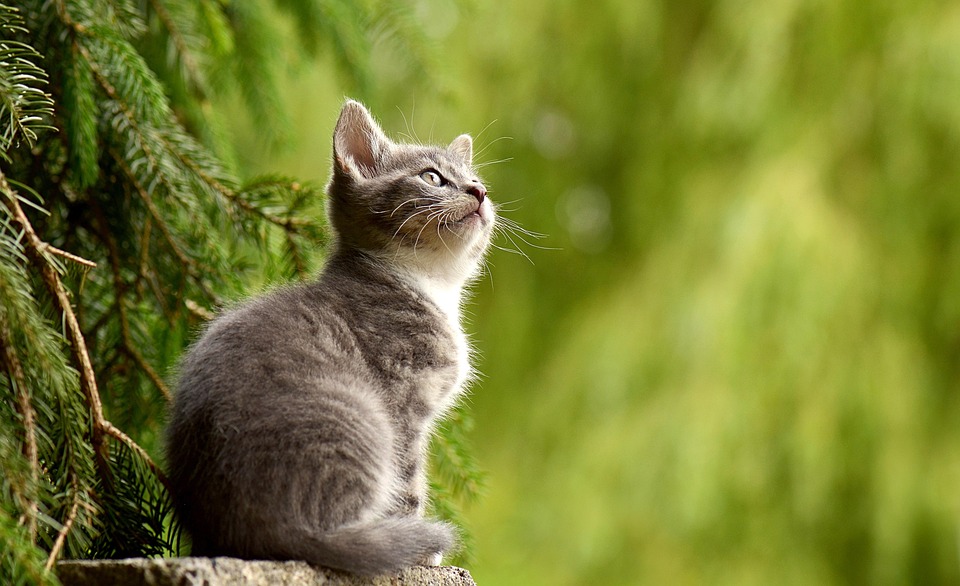
It is a model made of various materials and shadings, portraying a feline with a raised paw, either the right or the left and some of the time even both. Generally it addresses the Japanese Bobtail feline, which showed up from the Asian mainland somewhere around 1000 years prior. It has a "weaved" tail taking after more the tail of a hare, brought about by a hereditary latent quality and is known as the "road felines" in Japan.
Generally the feline has pursued individuals all over the planet for millennia. Old Egypt is known to be one of the most established culture revering felines, preserving them later their demise in proposing to Bath, the feline goddess otherwise called Bastet addressing assurance, fruitfulness and parenthood. An Egyptian rancher found in 1888 near the city of Beni Hasan a huge burial chamber with eighty thousands feline mummies, dating to 1000-2000 BCE.
In numerous social orders the feline was tamed and was a helpful buddy killing mice, rodents and snakes. It was hence not just a decent gatekeeper to keep vermin out of yields and reaps, however it likewise turned into a wonderful pet to have around, continually keeping up with its freedom for which it is known for.
In spite of these positive ascribes in the Middle Ages and even into Renaissance in Europe it was related with vanity, black magic and blasphemers and surprisingly consumed as image of Satan. It is said, that the Inquisition added to the Black Plague, the Pest, which killed in excess of 25 million individuals in Europe somewhere in the range of 1347 and 1352, in light of the fact that a long time before they disposed of millions of felines.
In Japan it isn't known, that the feline at any point ran into shame and the Maneki Neko is by all accounts around since the later piece of the Edo time frame (1603-1867), but the specific beginnings are questionable. The left collected paw draws in cash, while the right ensures it. In the two cases it is accepted to bring best of luck and can be discovered of shops, eateries, parlors and different organizations.
There are a few legends attempting to clarify the Maneki Neko "peculiarity". The actual feline with the raised paw appears as though it is cleaning up. As indicated by a Chinese adage assuming a feline does that it will rain and as per the Japanese it implies, that somebody will visit. It could along these lines be that the washing Maneki Neko adds to bring in clients.
Quite possibly the most well-known legend is about an affluent medieval master who is saved from lightning by the call of a become a close acquaintence with feline with a helpless minister. His sanctuary, the Gotoku-ji sanctuary in Western Tokyo, becomes prosperous because of ruler and later the demise of the feline the first Maneki Neko is made in quite a while honor.
Another tells about a more established lady from Imado, Eastern Tokyo, who needs to sell her feline due to her destitution, however at that point later a fantasy, where her feline advises her to make earth sculptures with her picture, the principal Maneki Neko she become rich and affluent.
Then, at that point, there is the account of the concubine living in Yoshiwara in Eastern Tokyo, who had a darling feline. One night the feline continued to pull at her kimono, the proprietor cut the head off it not understanding, that the feline was attempting to save her from a snake, which was prepared to strike her from the roof. The mistress was brightened up by one of her clients with a wooden feline as a gift, the principal Maneki Neko.
There are numerous different legends a large portion of which come from around the Tokyo region. Regardless of which is the genuine one truth is that the Maneki Neko thus the feline is an exceptionally well known creature in Japan. Today Maneki Nekos can be found all over, outside the cafés, shops and organizations, yet additionally as key rings, sculptures in many sizes, shadings to keep in the home, as tattoos on the body.
The religion of the feline has additionally one more fundamental entertainer in Japan: Hello Kitty is one of the most well known Japanese white bobtail felines with a red lace everywhere: dolls, stickers, welcoming cards, garments, extras and numerous different items portraying the feline and for teens as well as for clique like grown-up supporters.
Felines are interesting for their free nature, for their apathy when the time has come to chill off, for their entertaining conduct when they are struck by interest, yet additionally in light of their hero nature. In addition to the fact that they are great contenders, however their readiness while flying through the air is exceptional. They are adaptable to such an extent that even the judokas from everywhere the world could just take in something from them. When thrown out of sight or tumbling from a tree they are so talented to pivot around and depend on the entirety of their fours, something that could be extremely valuable when tossed by a rival in a judo battle.